Thursday, June 26, Prague
|
Old Town Square is located between Wenceslas Square and Charles Bridge. The square features buildings belonging to various architectural styles, including the Gothic Church of Our Lady before Týn, which has been the main church of this part of the city since the 14th century.
Jan Hus Memorial
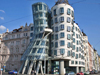
The Dancing House, or Fred and Ginger, is the nickname given to the Nationale-Nederlanden building on the Rašínovo nábreží. The building was designed in 1992 and was completed four years later in 1996. It was designed by the Croatian-Czech architect Vlado Milunic in cooperation with Canadian-American architect Frank Gehry on a vacant riverfront plot. The property is of great historical significance as its site was the location of a house destroyed by the U.S. bombing of Prague in 1945.
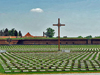
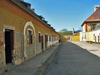
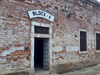
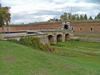
Terezín was a concentration camp 30 miles north of Prague during the World War II. It was originally a holiday resort reserved for Czech nobility. By 1940, Nazi Germany had assigned the Gestapo to turn Terezín into a Jewish ghetto and concentration camp. It held primarily Jews from Czechoslovakia, as well as tens of thousands of Jews deported chiefly from Germany and Austria, as well as hundreds from the Netherlands and Denmark. More than 150,000 Jews were sent there, including 15,000 children, and held there before being sent by rail transports to their deaths at Treblinka and Auschwitz extermination camps in occupied Poland. At the end of World War II, there were 17,247 survivors of Terezín. Less than 150 children survived.
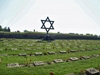
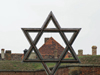
Star of David monument located at the National Cemetery (Národní hrbitov) in front of the Small Fortress in Terezín. It is crafted out of railroad tracks, which symbolically honors the Jewish victims transported to the ghetto by train. Established after liberation in 1945, this artificially created burial ground contains the exhumed remains of individuals from mass graves, the Terezín Ghetto, nearby forced labor camps, and late-war death marches.
Beze jmena (Nameless), created to commemorate the victims of the camp.
|