Sunday, August 2Amsterdam, NetherlandsAmsterdam is the capital and largest city of the Kingdom of the Netherlands. Amsterdam is colloquially referred to as the "Venice of the North", for its large number of canals. Amsterdam's main attractions include its historic canals; the Rijksmuseum, the state museum with Dutch Golden Age art; the Van Gogh Museum; the Dam Square, where the Royal Palace of Amsterdam and former city hall are located; the Amsterdam Museum; Stedelijk Museum, with modern art; the Concertgebouw concert hall; the Anne Frank House; the Scheepvaartmuseum, the Natura Artis Magistra; Hortus Botanicus, NEMO, the red-light district and cannabis coffee shops. |

|
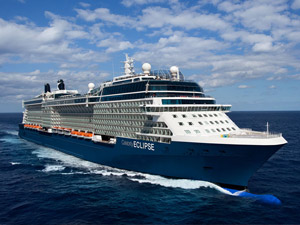
Monday, August 3At SeaWhile at sea, take the time to recharge before the next adventure. Lounge by the pool, be spoiled at the spa, taste the delicacies or explore the venues on-board, until we arrive at the next amazing destination. |
|
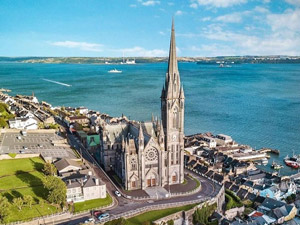
Tuesday, August 4Cork (Cobh), IrelandCork and Cobh are not the same. Cork is a city and the county town of County Cork, while Cobh is a town located in County Cork, on Great Island in Cork Harbour. Cobh is about 15 miles from Cork City. Cobh, known from 1849 until 1920 as Queenstown, is a seaport town on the south coast of County Cork and home to Ireland's only dedicated cruise terminal. It’s known as the Titanic’s last port of call in 1912. |
|
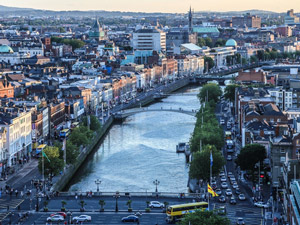
Wednesday, August 5Dún Laoghaire (Dublin), IrelandDún Laoghaire and Dublin are not the same place. Dún Laoghaire is a suburban coastal town located approximately 12 kilometers south of Dublin. While it's part of the greater Dublin area and considered part of the metropolitan Dublin region, it is a distinct town with its own administrative boundaries and identity. The town was built up alongside a small existing settlement following 1816 legislation that allowed the building of a major port to serve Dublin. It was known as Dunleary in the English language, until it was renamed Kingstown in honour of King George IV's 1821 visit, and in 1920 was given its present name Dún Laoghaire, the original Irish form from which "Dunleary" was anglicised. Over time, the town became a residential location, a seaside resort, the terminus of Ireland's first railway and the administrative centre of the former borough of Dún Laoghaire, and from 1994, of the county of Dún Laoghaire–Rathdown. Dún Laoghaire is popular for strolls on the East Pier and locally caught fish and chips. The National Maritime Museum of Ireland has nautical art and artefacts inside a 19th-century sailors’ church, while the harbour is a busy hub for fishing, water sports and cruises. Nearby Sandycove is home to the James Joyce Tower and Museum, as well as the sheltered beach and bathing spot at Forty Foot. |
|
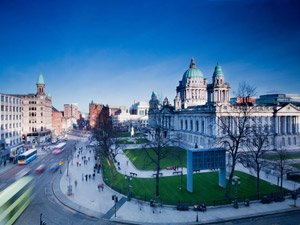
Thursday, August 6Belfast, Northern IrelandBelfast is the capital city and principal port of Northern Ireland, standing on the banks of the River Lagan and connected to the open sea through Belfast Lough and the North Channel. First chartered as an English settlement in 1613, the town's early growth was driven by an influx of Scottish Presbyterians. When granted city status in 1888, Belfast was the world's largest centre of linen manufacture, and by the 1900s her shipyards were building up to a quarter of total United Kingdom tonnage. It is the birthplace of the RMS Titanic. Sectarian tensions existed with the Irish Catholic population that was drawn by mill and factory employment from western districts. Heightened by division over Ireland's future in the United Kingdom, these twice erupted in periods of sustained violence: in 1920–22, as Belfast emerged as the capital of the six northeast counties retaining the British connection, and over three decades from the late 1960s during which the British Army was continually deployed on the streets. A legacy of conflict is the barrier-reinforced separation of Protestant and Catholic working-class districts. |
|
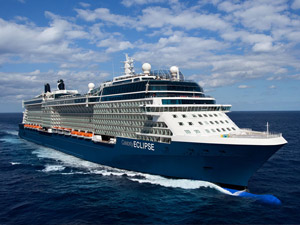
Friday, August 7At SeaWhile at sea, take the time to recharge before the next adventure. Lounge by the pool, be spoiled at the spa, taste the delicacies or explore the venues on-board, until we arrive at the next amazing destination. |
|
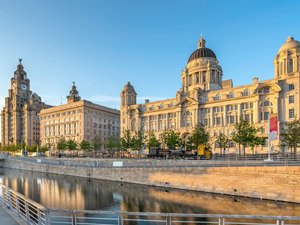
Saturday, August 8Liverpool, EnglandLiverpool is a maritime city in northwest England, where the River Mersey meets the Irish Sea. Established as a borough in Lancashire in 1207, Liverpool became significant in the late 17th century when the Port of Liverpool was heavily involved in the Atlantic slave trade. The port also imported cotton for the Lancashire textile mills, and became a major departure point for English and Irish emigrants to North America. Liverpool rose to global economic importance at the forefront of the Industrial Revolution in the 19th century and was home to the first intercity railway, the first non-combustible warehouse system (the Royal Albert Dock), and a pioneering elevated electrical railway; it was granted city status in 1880 and was moved from Lancashire to the newly created county of Merseyside in 1974. It entered a period of decline in the mid-20th century, but has experienced regeneration since the European Union selected it as the European Capital of Culture in 2008. The economy of Liverpool is diversified and encompasses tourism, culture, maritime, hospitality, healthcare, life sciences, advanced manufacturing, creative, and digital sectors. Residents of Liverpool are often called "Scousers" in reference to scouse, a local stew made popular by sailors in the city, while "Scouse" is also the most common name given to the local accent. |
|
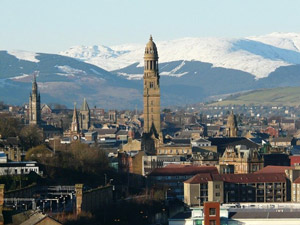
Sunday, August 9Glasgow (Greenock), ScotlandGreenock is a large industrial town in north-west Renfrewshire, on the south side of the River Clyde, located about 23 miles west of Glasgow. Greenock is the cruise port for Glasgow. It is located on the south bank of the River Clyde by the Tail of the Bank. It is a former burgh within the historic county of Renfrewshire, and forms part of a contiguous urban area with Gourock to the west and Port Glasgow to the east. It lies on the south bank of the Clyde at the "Tail of the Bank" where the River Clyde deepens into the Firth of Clyde. |
|
Monday, August 10At SeaWhile at sea, take the time to recharge before the next adventure. Lounge by the pool, be spoiled at the spa, taste the delicacies or explore the venues on-board, until we arrive at the next amazing destination. |

|
Tuesday, August 11Lerwick, ScotlandLerwick is the main town and port of the Shetland archipelago. Shetland's only burgh, Lerwick had a population of about 7,000 residents in 2010. It is the northernmost major settlement within the United Kingdom. Centred 123 miles off the north coast of the Scottish mainland and on the east coast of the Shetland Mainland, Lerwick lies 211 miles north-by-northeast of Aberdeen; 222 miles west of the similarly sheltered port of Bergen in Norway; and 228 miles south east of Tórshavn in the Faroe Islands. Being located further north than Saint Petersburg and three of the four mainland Nordic capitals, and on the same latitude as Anchorage, Alaska, Lerwick's nights in the middle of summer only get dark twilight and winters have below six hours of complete daylight. |

|
Wednesday, August 12Inverness/Loch Ness, ScotlandInverness is a city on Scotland’s northeast coast, where the River Ness meets the Moray Firth. It's the largest city and the cultural capital of the Scottish Highlands. Its Old Town features 19th-century Inverness Cathedral, the mostly 18th-century Old High Church and an indoor Victorian Market selling food, clothing and crafts. The contemporary Inverness Museum and Art Gallery traces local and Highland history. Inverness is known for:
|

|
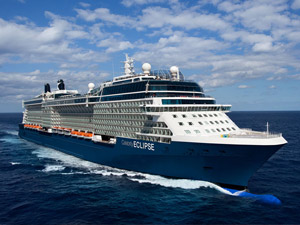
Thursday, August 13At SeaWhile at sea, take the time to recharge before the next adventure. Lounge by the pool, be spoiled at the spa, taste the delicacies or explore the venues on-board, until we arrive at the next amazing destination. |
|
Friday, August 14Amsterdam, NetherlandsAmsterdam is the capital and largest city of the Kingdom of the Netherlands. Amsterdam is colloquially referred to as the "Venice of the North", for its large number of canals. Amsterdam's main attractions include its historic canals; the Rijksmuseum, the state museum with Dutch Golden Age art; the Van Gogh Museum; the Dam Square, where the Royal Palace of Amsterdam and former city hall are located; the Amsterdam Museum; Stedelijk Museum, with modern art; the Concertgebouw concert hall; the Anne Frank House; the Scheepvaartmuseum, the Natura Artis Magistra; Hortus Botanicus, NEMO, the red-light district and cannabis coffee shops. |

|