Friday, July 7
|
Copy of Wall Street bull in New York
Beggar statue, meant to represent the plight of the working class.
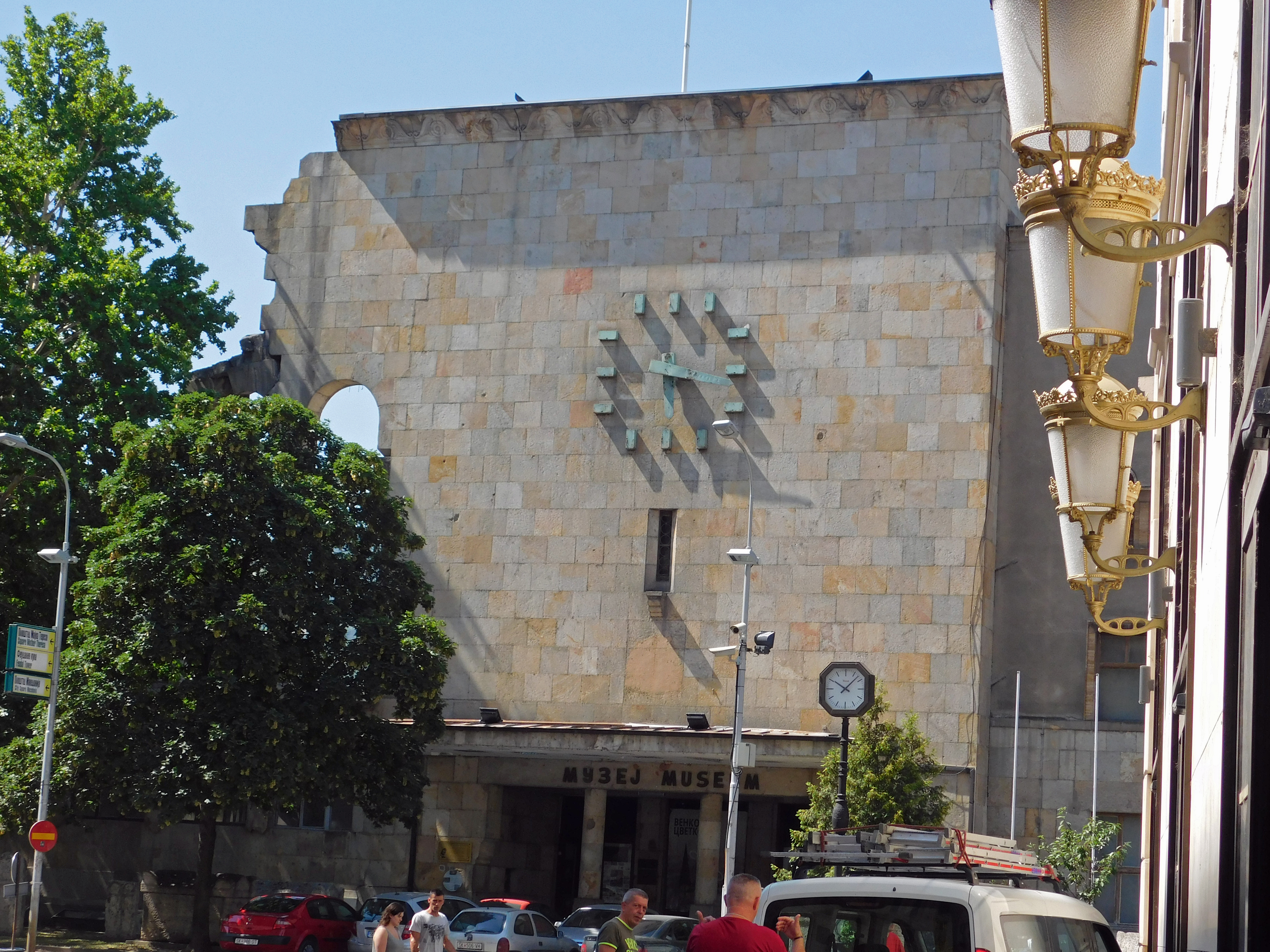
Museum of the City is a cultural institution located in a former railway station that was partly destroyed in the 1963 earthquake.
Mother Teresa (Mary Teresa Bojaxhiu) was born in 1910 in Skopje. After living in Skopje for eighteen years, she moved to Ireland and then to India, where she lived for most of her life. The house she lived in is gone but there is a Mother Teresa Memorial House built on the location of the once Sacred Heart of Jesus Roman Catholic Church, where Mother Teresa was baptized.
Mother Teresa Memorial House
The Church of Saint Clement of Ohrid, often called simply Soborna Crkva, is the largest cathedral of the Macedonian Orthodox Church.
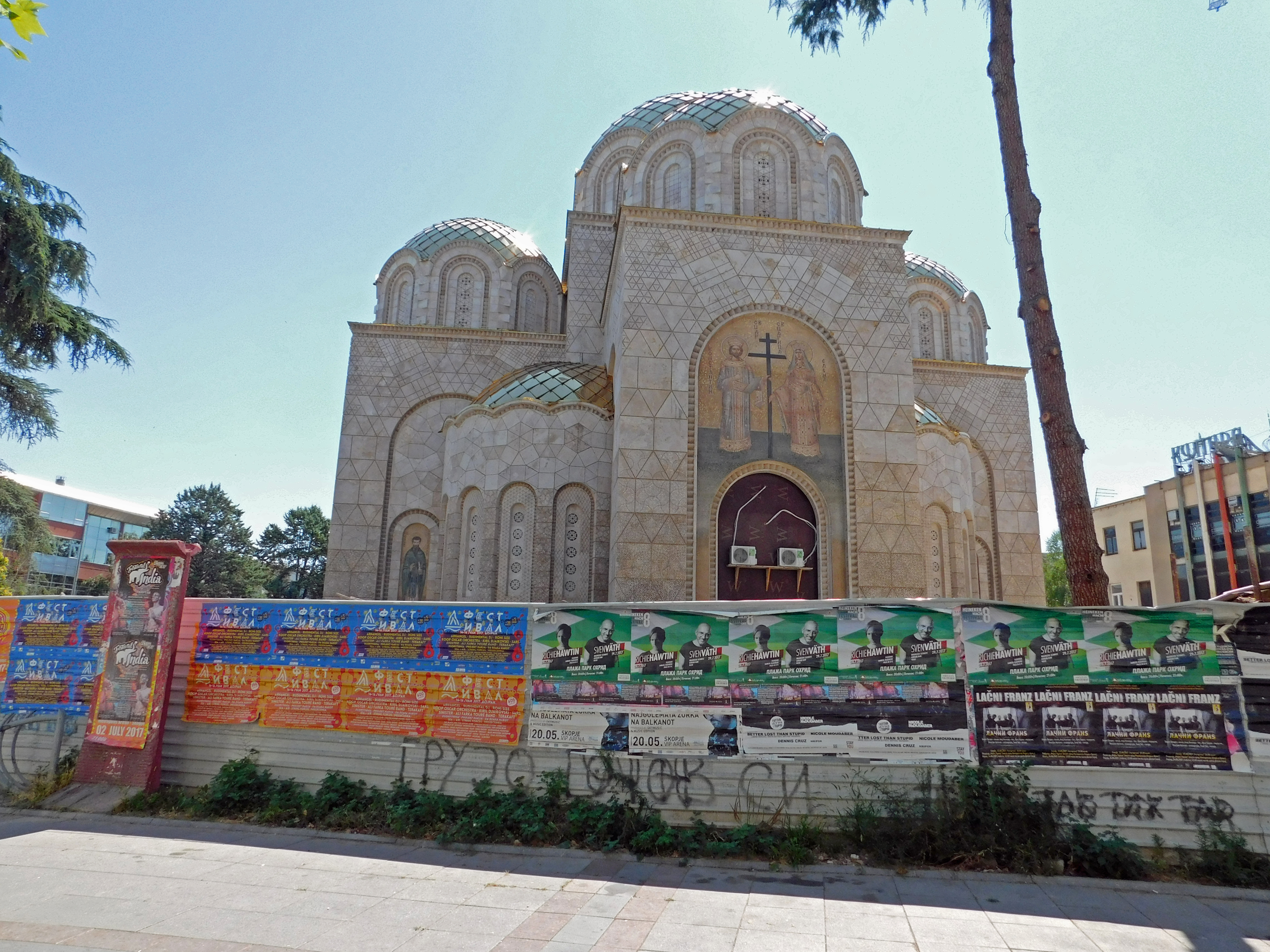
Church Saints Constantine and Elena
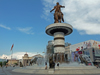
Macedonia Square is the main square of Skopje. The square is the biggest in North Macedonia. It is located in the central part of the city and it crosses the Vardar River. The Christmas festivals are always held there and it commonly serves as the site of cultural, political and other events. The independence of Macedonia from Yugoslavia was declared here by the country's first president, Kiro Gligorov.
One of the prime attractions is the city’s collection of statues that dot the city’s core. There are well over 100 sculptures in the rather small city, largely built as part of a massive government project to spiff up the city.
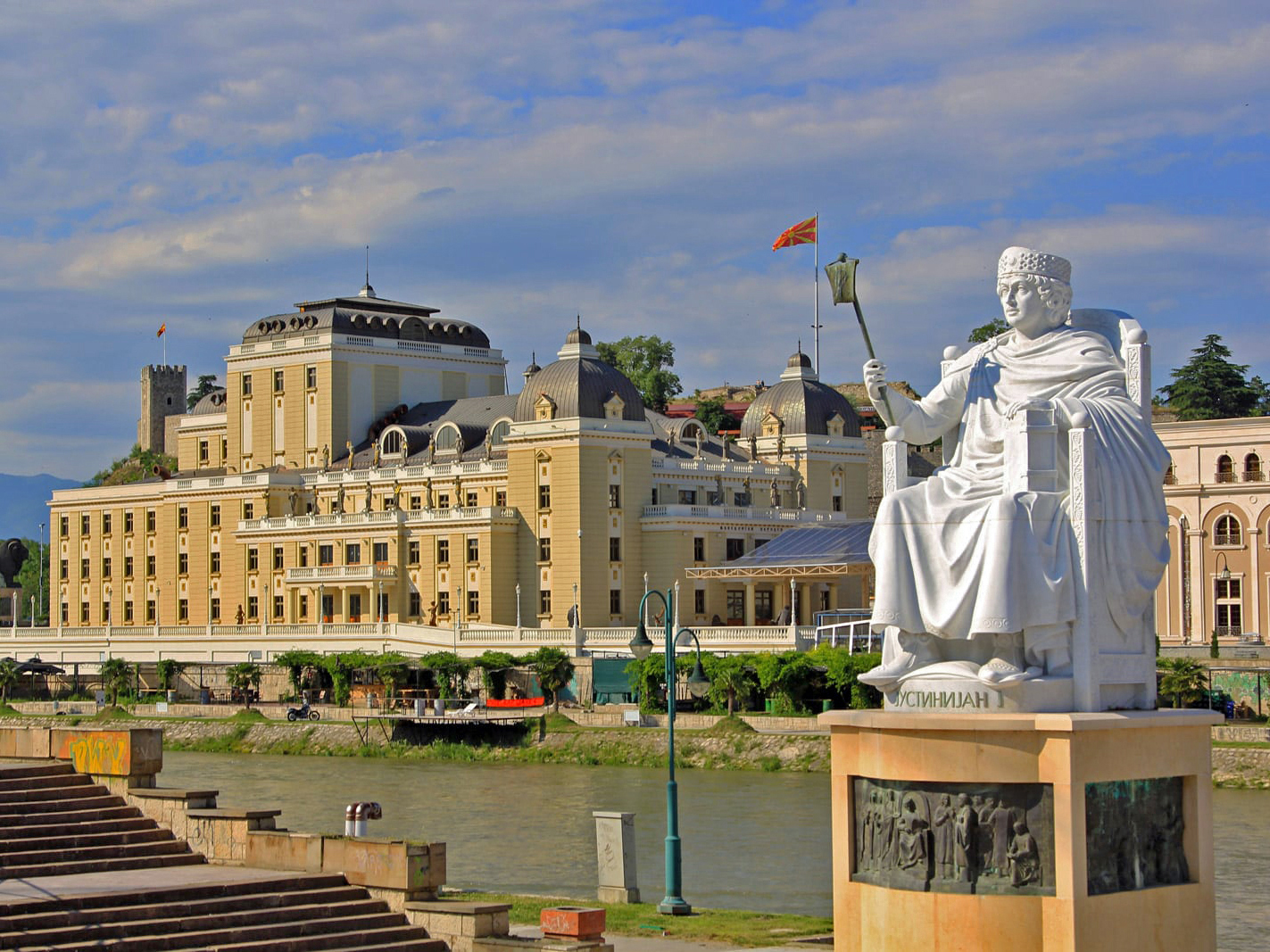
Justinian I, also known as Justinian the Great and Saint Justinian the Great in the Eastern Orthodox Church, was the Eastern Roman emperor from 527 to 565.
The Art Bridge across the Vardar River features many statues of noted Macedonian artists and musicians. The bridge includes 29 sculptures, with 14 at each side and one in the center.
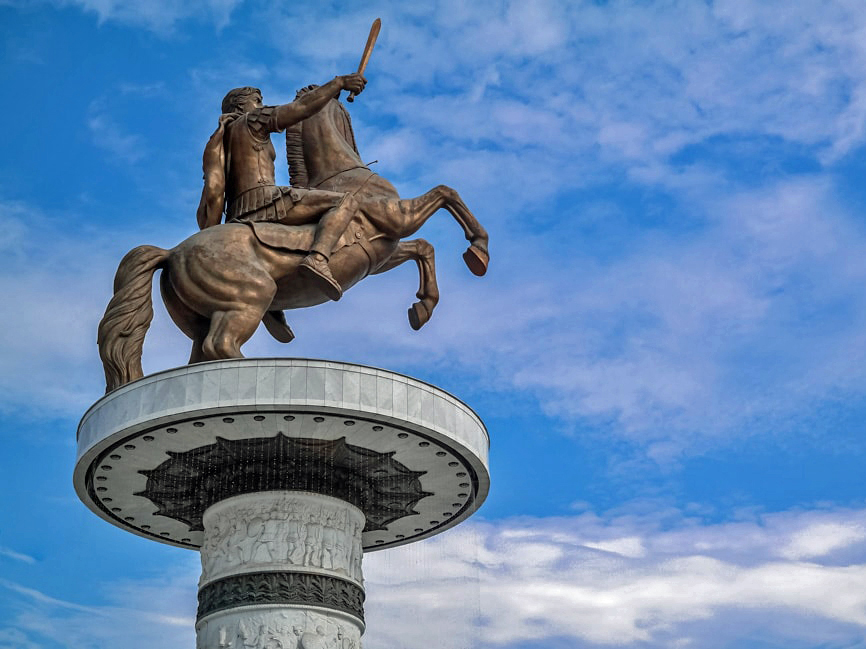
Alexander the Great on Bucephalus, also called Warrior on a Horse and Equestrian Warrior.
|